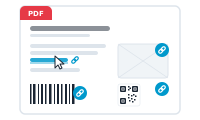
The hyperlink node turns a value from your data into a clickable link in the finished document. It's how a URL in your spreadsheet becomes something a reader can actually…
A plain condition splits the flow two ways: success or fail. A dynamic condition handles the cases where two isn't enough — when a value could be one of several…
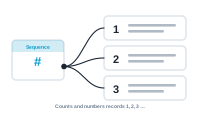
A sequence node counts. It produces running numbers across your records — for numbering, labelling, or anything that needs to increment as the merge proceeds.
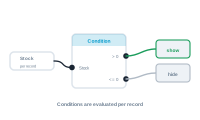
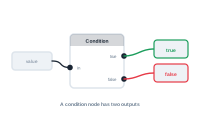
A condition node is where your graph makes a decision. It checks something about a record and sends the flow one way if it's true, another way if it's not.
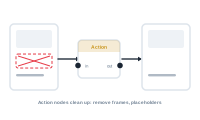
Action nodes are how you handle the messy reality of real data. When a value is missing or something can't proceed, an action node decides what should happen — instead…
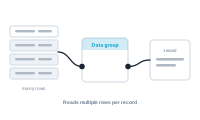
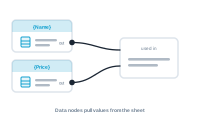
Data nodes are where values enter the editor. They read from your datasource so the rest of the graph has something to work with — the opposite end of the…
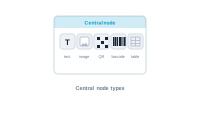
A central node is the endpoint of a workspace — the spider every thread runs to. Which kind of central node you use depends on what that workspace produces.
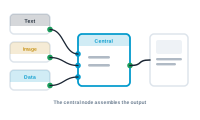
Every workspace has exactly one central node — the endpoint everything else builds toward. Picture it as the spider at the center of the web: every thread runs to it,…